

A full month in Asunción, where I live, and the capital of Paraguay, for those who don’t know.
I’ll start with the wildest story of my time in South America.
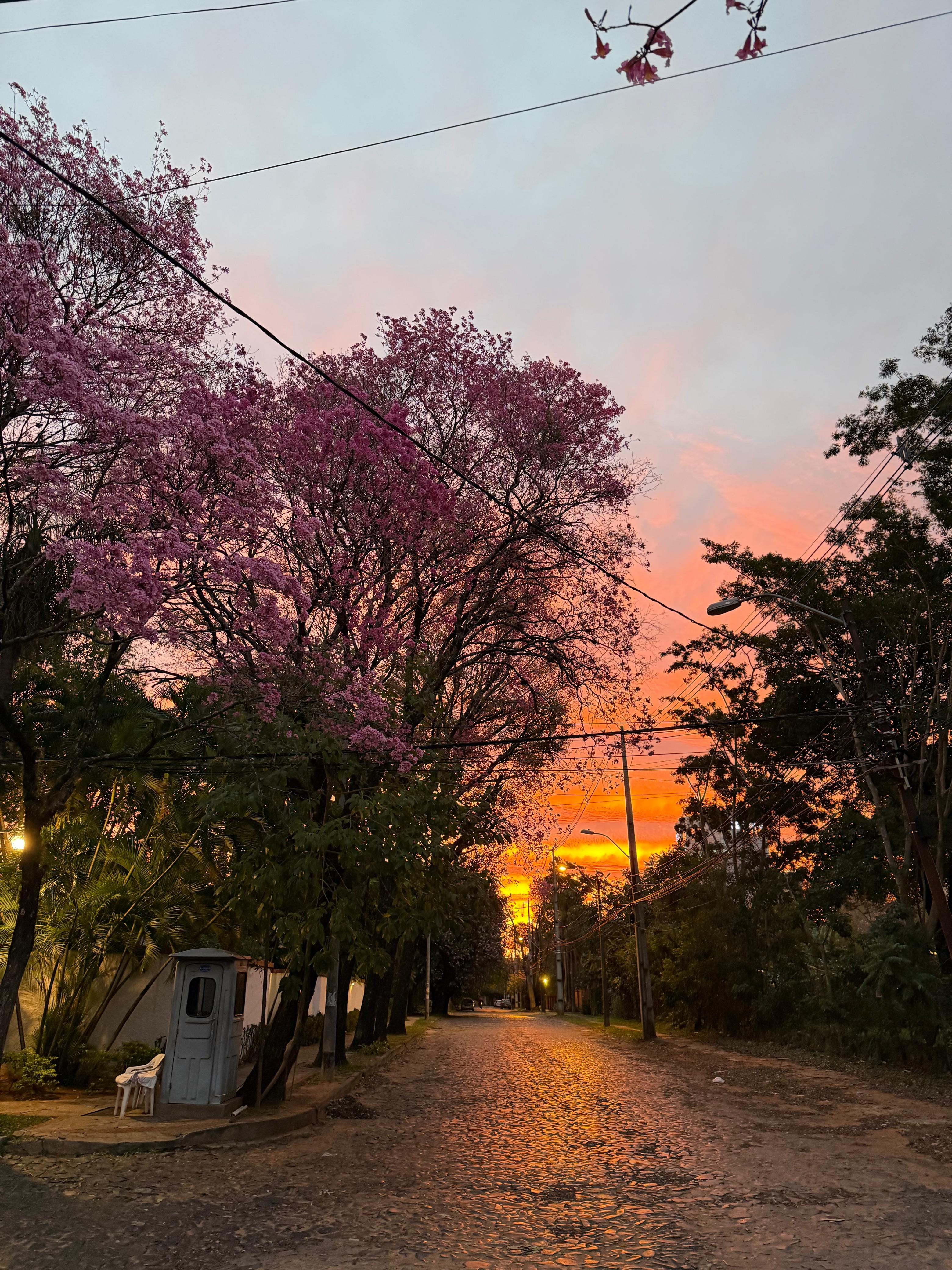
Spring in Asunción 🇵🇾
I was driving home from the gym in the truck and rolled through a light as it flicked from yellow to red. A policeman on a motorbike followed me the whole way home. As I pulled up to park, my neighbours came out to see what the fuss was about. I explained the light, and that the officer seemed less interested in writing me a ticket than in discussing a cash figure.
What happened next I would never have predicted, and I am confident none of you would have either.
The neighbours heard the number and decided they had seen this movie too many times. They told him to leave the street. He refused and kept pressing for the money. So they picked up cobblestones and started throwing them at him. He went for the bike, and the rocks kept knocking him about until he barely scraped out of the street.
I have never seen law enforcement dealt with like that anywhere in the world, and I lived four years in Indonesia. I am not endorsing it. I just sat there in the truck trying to process what I was watching.
The neighbours explained it afterwards in simple terms. They are done with police shakedowns, and this is a street with enough standing to say so. They also saved me from handing over a decent stack of cash, because it was my first ever run in with Paraguayan police and I had no idea what the protocol was.
I repaid them the Australian way, a carton of cold beer. And it is fair to say I will never again argue with them about where I park the truck, which I once stupidly did.
A bloke from rural Tasmania does not always understand how these countries actually function.
That was as big an eye opener as I have had in South America!
On top of that, I have finally got the truck back and ready for a big road trip. Everything is working great with the new turbo, except for the price of diesel and a 6.7L engine averaging 25L per 100km…
I have paid the registration to the city of Asunción and I am now waiting on the new cédula verde (green card) for the vehicle, which means I can drive it anywhere in Mercosur.
Why Paraguay
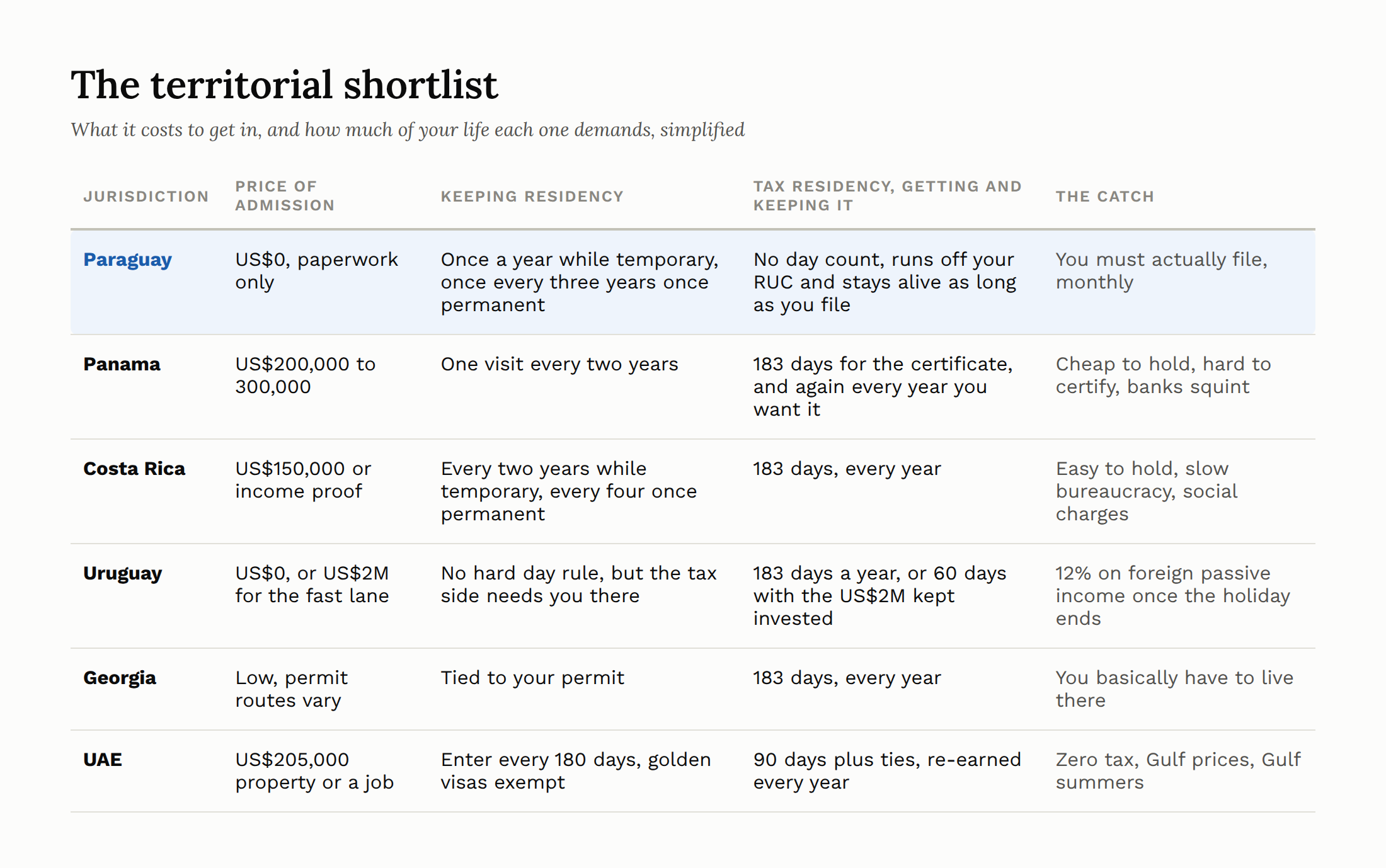
I keep trying to prove myself wrong on this. Every time I rerun the numbers on another jurisdiction, Paraguay wins again. Portugal, Dubai, Panama, Uruguay, Georgia, the lot. Here is why:
No investment requirement. No property to buy, no deposit locked in a local bank. Paperwork gets you temporary residency, then permanent.
No 183 day leash. One visit a year while temporary, one every three years once permanent.
A real tax number that runs off your RUC, not a day count. Territorial system, flat 10%, foreign source income generally untaxed.
Panama, everyone’s first guess, wants US$200,000 locked up and 183 days a year for the tax certificate.
Paraguay Discussion
The more time I spend here, the more I am starting to scratch the surface of how things actually work, much like I did in Argentina when I was writing about Buenos Aires.
Banking here is hard. Fresh residency gets you a basic account with training wheel limits. Some banks will not open the door until you hold permanent residency. Cards start tiny and grow only as fast as your declared income record.
You can get by fine with USD accounts from crypto based platforms like UglyCash and Meru (my favourite), but one quote from a Paraguayan local recently stuck with me:
“You only pay full price for everything you buy in Paraguay if you want to.”
Which brings me to the goal: Paraguayan credit cards. Ueno is the bank most of Paraguay runs on, and the black tier is where the limits, the cards and the service actually live. The bank does not care what I hold offshore. It cares about declared income inside Paraguay, month after month. My target is to lift what I declare here, and hold it there for six months, to the point where I qualify for the discounts these cards offer. 20 to 40% off restaurants, fuel, supermarkets, clothes. For everyday life here, that seems a smart thing to aim for.
When I walked into their experience centre to start the upgrade, they wanted one thing: comprobantes de ingreso. Income receipts. Build the record, get the bank.
The best kept secret in the country? the CDA? The certificado de ahorro. Paraguay’s humble term deposit. On the longer terms the digital banks pay around 10% a year in guaraníes. Ten percent, in a currency where inflation just printed 1.5% and which has not been redenominated since 1943. Run that maths. A real return north of 8%, guaranteed up to the deposit cap, for clicking a button in an app. In Australia I would need to take full equity risk to earn that, and then hand the ATO a slice of it.
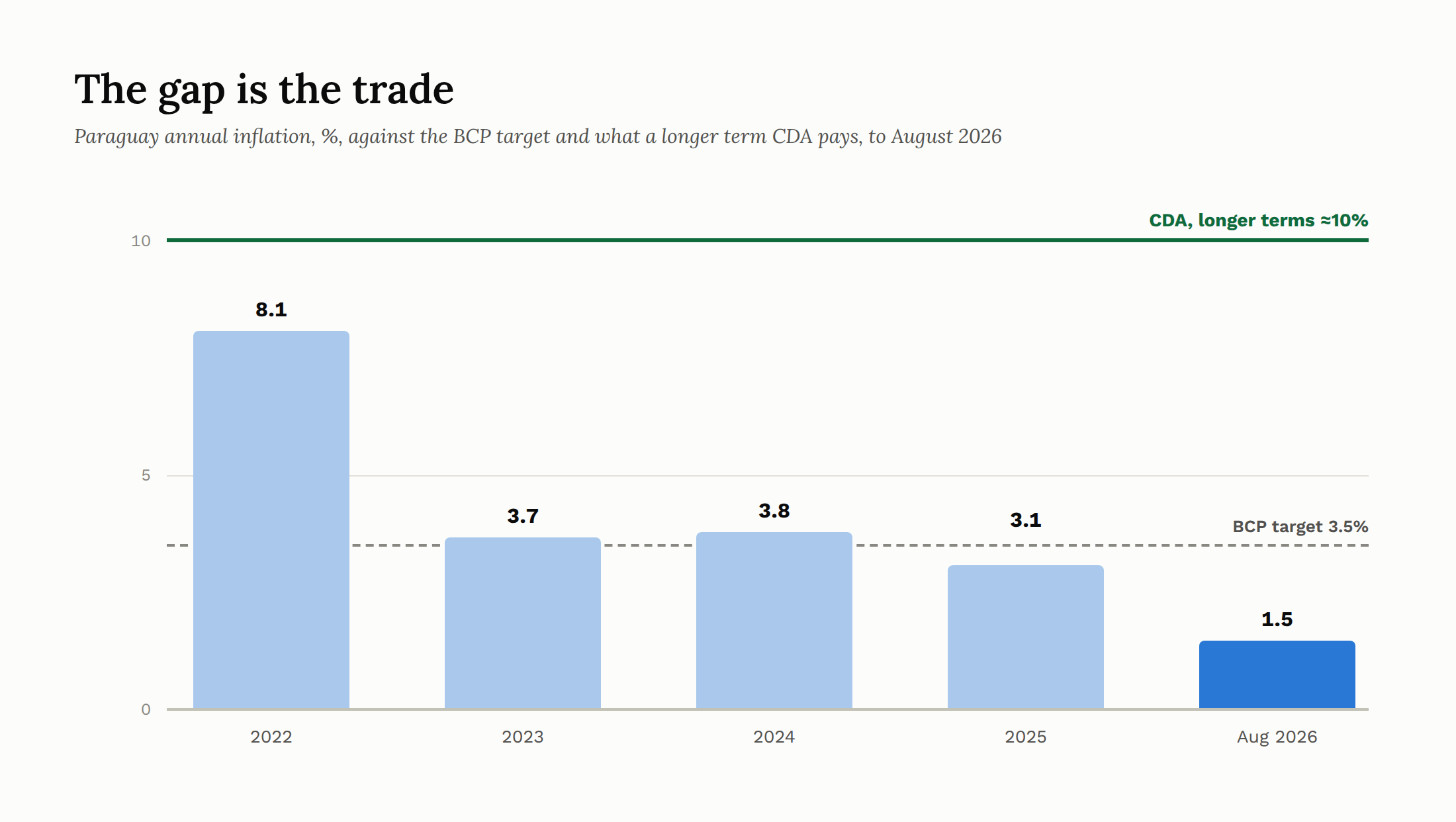
One catch on the rate. The banks paying 10% and better on the long terms are the digital and smaller players, ueno, Interfisa, Solar. The big traditional banks pay roughly half that. Which is exactly why the next part matters.
The fair comeback: what if a Paraguayan bank blows up? Deposits, CDAs included, are guaranteed by the central bank’s Fondo de Garantía de Depósitos, up to 75 minimum wages per person per bank, about 228M Gs, call it US$38,000, and it stacks across banks. The system runs capital adequacy around 17% against bad loans under 3%, and there has not been a serious blowup since the late 1990s. Not zero risk. Nothing paying 10% is zero risk. But I can measure it, cap it and spread it, so I keep each bank near the guarantee and treat the rest as at risk money.
So would I buy an apartment here right now? Asunción seems to be one giant construction site right now, towers on every second block, and most of the stock sells off the plan. Buying off the plan means handing a developer my money years before the building exists. If the project stalls, and half built towers and dramatic delays are not exactly rare in this part of the world, I am an unsecured creditor of a construction company, in a market with thin protections and no realistic path to getting the money back.
Completion risk is the whole game, and I have no edge on it. I can read exploration results. I cannot read a developer’s balance sheet from a rendering and a sales suite.
And even the towers that do get finished have to beat the CDA to earn a place in my life, and they probably do not. Local salaries cannot support the rents these prices need, so the yield lands below what the bank already pays me for zero effort, and that is before the body corporate fees, the vacancies, the maintenance and the years of illiquidity when I want out.
Why would I lock money into a half promise at a similar or potentially lower yield when the boring alternative pays 10%, guaranteed under the cap, and hands the cash back at maturity? Overpriced against local incomes, illiquid on the way out, and outyielded by a term deposit. Currently happy to take the CDA at 10% and rent the apartment with the view.
Maybe I’m wrong on all of this, happy to hear the otherside of the arguement!
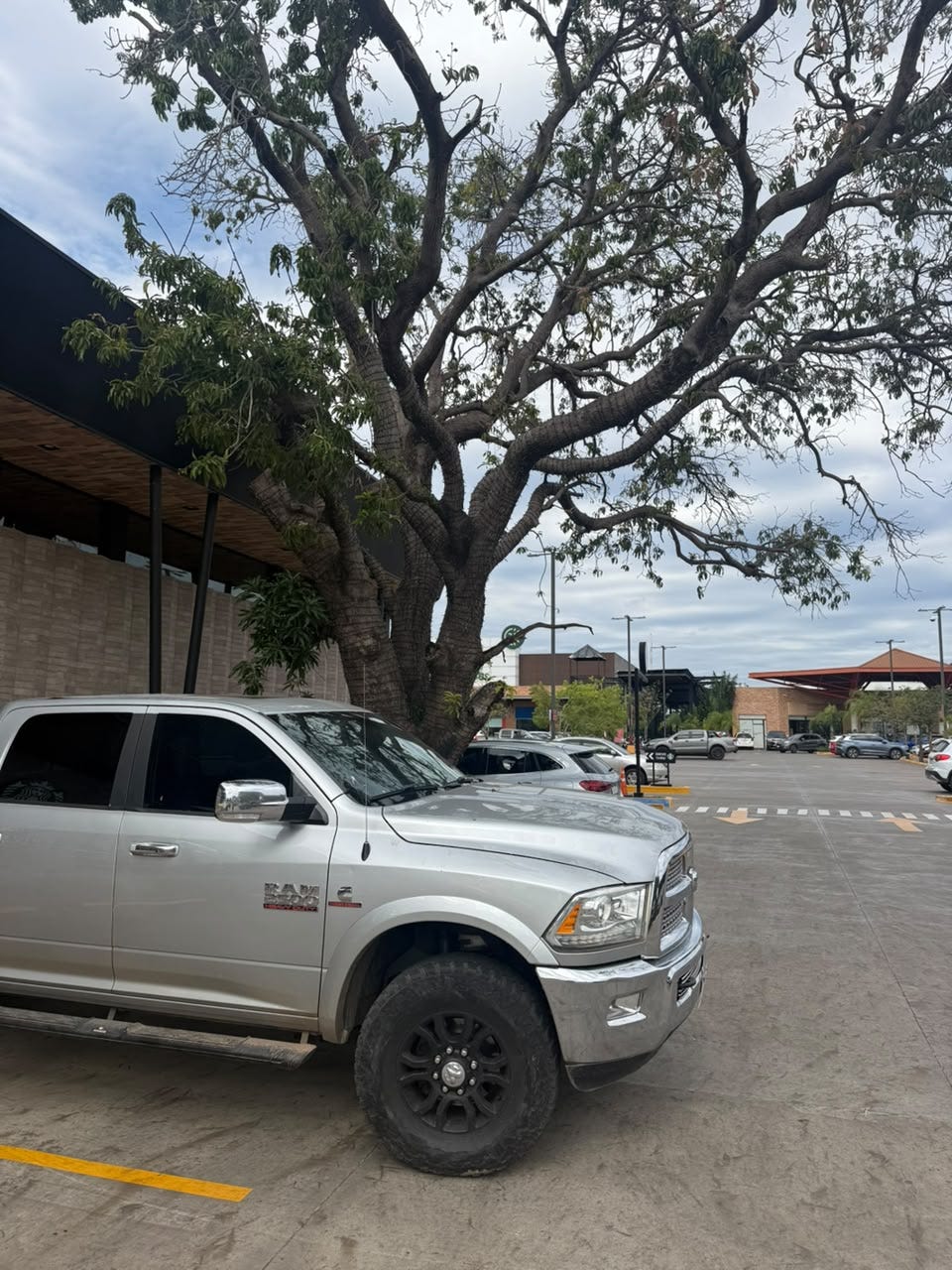
Off-topic, but this photo is from Plaza Madero, Great gym out here called Zona Fit, Asunción 🇵🇾
Andina: 1300 x 500m defined at Cobrasco (TSX-V: ANDC)
Laetst drill results from this week: 322m at 0.51% copper, 70ppm molybdenum and 1.6g/t silver from 74m, including 200m at 0.65% copper from 82m, and within that 44m at 0.81% copper from 204m. The hole was drilled from Pad 15, roughly 350m northwest of Pad 3, and it extends the mineralised footprint to around 1,300m by 550m to 700m.
Assays for three more holes are pending and another hole is turning right now.
The stock finished the month at C$1.22, up 1.7% on August. After the run this thing has had, a quiet month of consolidation while the drills keep spinning is exactly what I want to see.
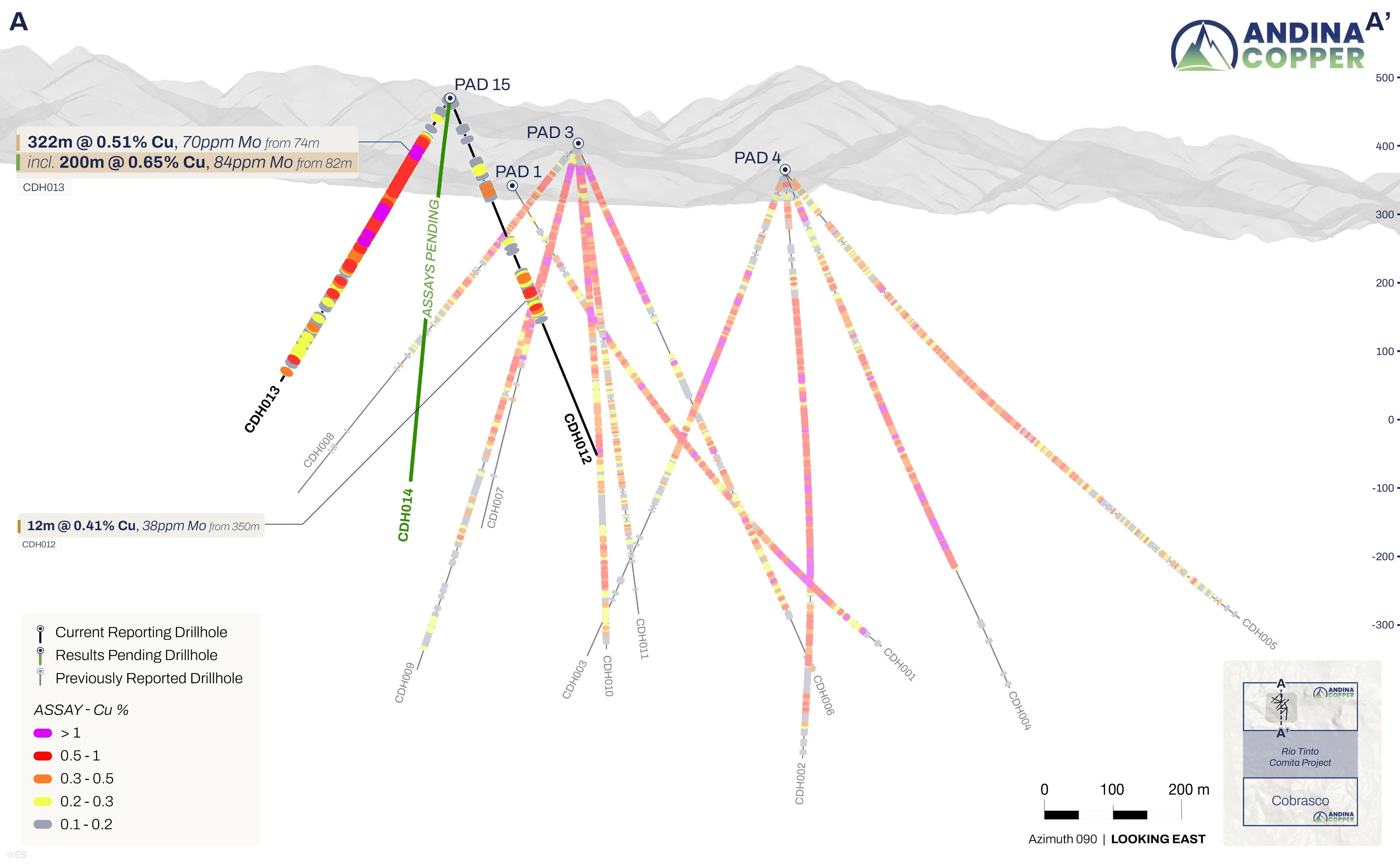
What sets Cobrasco apart from many other Andean porphyry systems is the shallow, high-grade mineralisation occurring within a broader background of phyllic-altered material grading around 0.3–0.4% copper. The attraction is that combination: a large mineralised system with higher-grade zones close to surface.
Below the line: The entire investment portfolio, a small red month, and a brand-new position with a management team I’m very familiar with.
Plus, what I’m watching and looking forward to in October.